Every "best trading journal" article on the internet follows the same pattern. A list of platforms. A feature comparison. A recommendation that suspiciously aligns with whoever paid the affiliate commission. This is not that article.
This is a structural evaluation of the trading performance software category as it exists in 2026. We review every major platform — including our own — against a framework that goes beyond features and pricing to ask the question that actually determines whether software improves your trading: does it change your behavior, or does it just document it?
We built TradeRefinery. We will be transparent about that. We will also be transparent about what every competitor does well, because dismissing legitimate tools does not serve you. What serves you is understanding the architectural differences between platforms so you can choose the one that matches what you actually need — not what a marketing page told you to want.
THE EVALUATION FRAMEWORK
Most comparisons evaluate trading journals on features: import support, chart types, mobile apps, pricing. Those matter. But they are surface attributes. Two platforms can both offer "AI analytics" while delivering fundamentally different capabilities.
We evaluate across seven dimensions that map to the actual mechanisms of trading improvement:
Dimensions 1 through 3 are table stakes. Every modern journal delivers some version of them. Dimensions 4 through 7 are where the category splits. Most platforms stop at analytics. The question is whether you need more than that.
THE PLATFORMS
What It Does Well
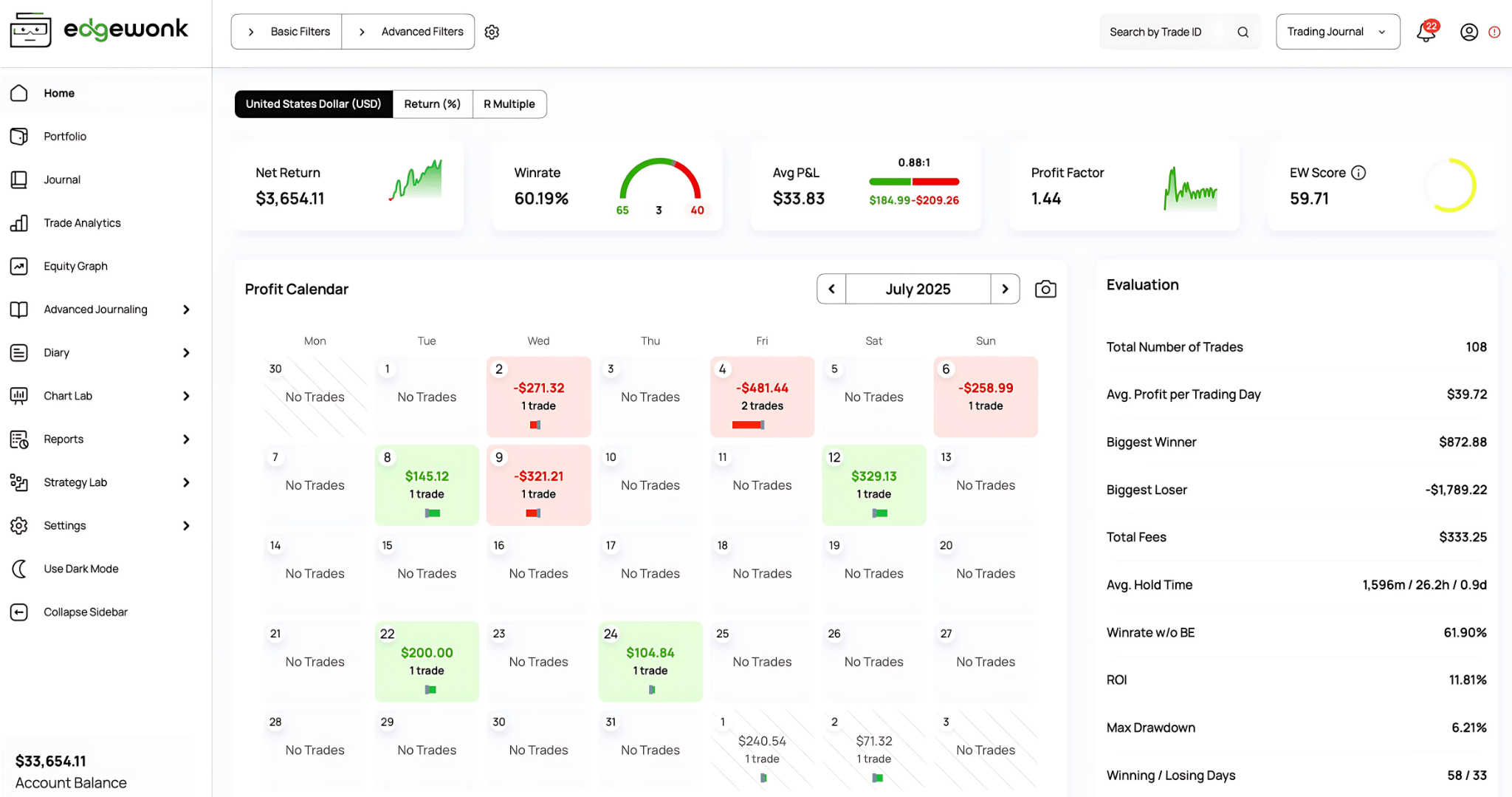
Edgewonk is the elder statesman of trading journals, built by the team behind Tradeciety.com. Its core strength is psychology-focused analytics — emotion tagging, the "Edge Finder" tool that surfaces which setups and conditions produce your best results, and a disciplined approach to journaling as a practice. The one-time pricing model (approximately $297 for 24 months) makes it the most affordable option for traders who want a permanent tool without subscription fatigue.
Edgewonk treats journaling as a craft. Its philosophy is that consistent, reflective review of your trades — combined with data-driven identification of your actual edge — produces behavioral change over time. For many traders, this approach works. It is simple, focused, and avoids feature bloat.
Where It Stops
Edgewonk does not quantify discipline as a measurable metric. It does not detect behavioral drift as a systemic pattern. It does not generate structured AI debriefs with actionable weekly improvement tasks. And it is built exclusively for individual traders — there is no multi-seat architecture, no desk oversight, no governance reporting. Its analytics are solid, but they are retrospective. They show you what happened. They do not govern what happens next.
What It Does Well
TraderSync is the most feature-rich retail trading journal on the market. Over 700 broker imports. The AI "Cypher" assistant that provides natural-language analysis of your trading patterns. Market replay with 250-millisecond precision — the best in the category. Backtesting capabilities integrated into the journal. A polished mobile app. Support for stocks, options, futures, forex, crypto, and CFDs.
For active day traders who want maximum analytical depth and the ability to replay their sessions at near-tick-level precision, TraderSync is a formidable tool. The Cypher AI is also the most visible AI feature in the category — it answers questions about your trading data in conversational format, which is a genuinely useful interaction model.
Where It Stops
TraderSync talks about discipline and risk management in its marketing, but it does not produce a quantitative discipline score. Cypher can comment on patterns, but it does not measure rule adherence as a formal metric. There is no behavioral drift detection engine monitoring your compliance trends over time. The platform is deep on analytics and replay, but it remains architecturally retrospective. Multi-user capabilities are limited. Institutional features are absent.
What It Does Well
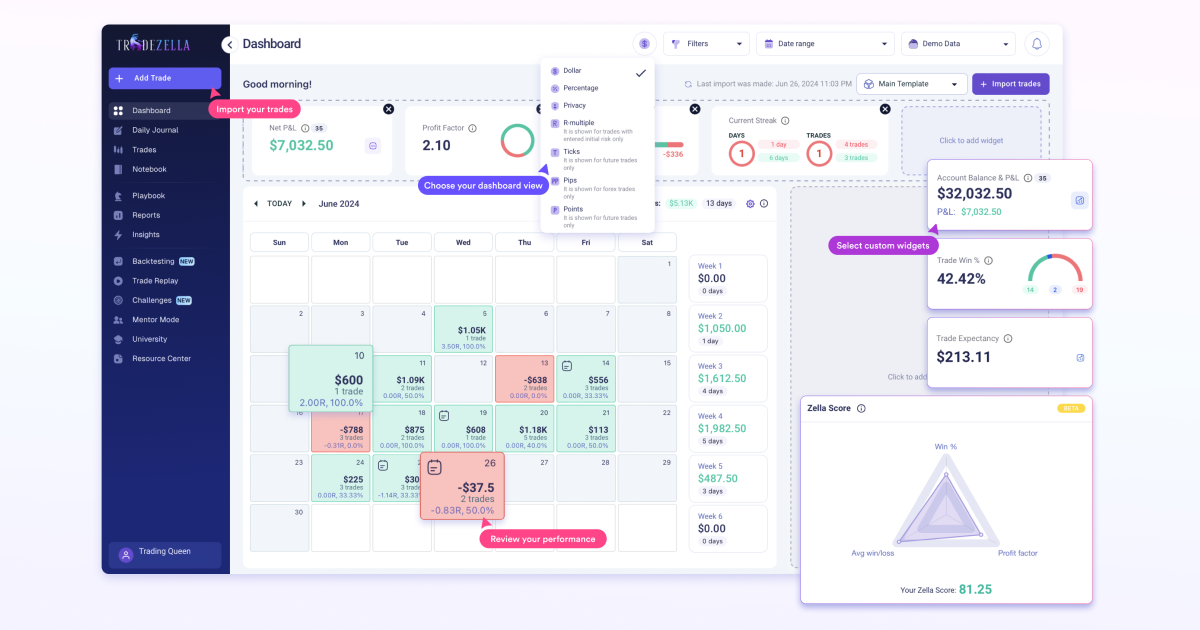
TradeZella has the most polished user experience in the category. Clean interface. Strong onboarding. Community features including sharing, mentor feedback, and webinars. Backtesting and trade replay built into the journal. A mobile app that actually works. Support for 100+ brokers. Strategy playbooks that let you organize and compare approaches.
TradeZella has also built the largest visible community in the space. For traders who value social learning, shared progress, and a modern UX, it is the most appealing option. The marketing is sharp, the product is well-designed, and the brand energy is high.
Where It Stops
TradeZella is a journaling and review platform. It does not quantify discipline. It does not detect behavioral drift. It does not generate structured AI debriefs with weekly action plans. It does not scale to multi-user desk environments. The analytics are good but not governance-grade. The platform excels at making trade review feel engaging — but engagement is not the same as enforcement.
What It Does Well
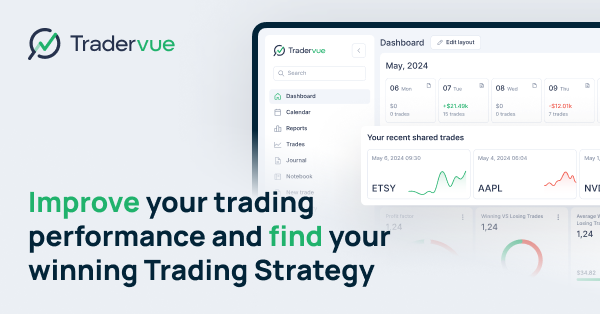
Tradervue is the longest-running trading journal in the market. It has served a loyal community for years with reliable trade import, solid analytics, and particularly strong cost and liquidity analysis for equity traders. The platform is mature, stable, and trusted. For traders focused on execution quality — commission impact, slippage analysis, and detailed per-trade cost breakdowns — Tradervue delivers capabilities that newer platforms have not prioritized.
Where It Stops
Tradervue's interface and feature set reflect its age. The analytics are functional but not AI-enhanced. There is no behavioral analysis layer, no discipline measurement, no drift detection, and no institutional architecture. The platform serves its existing user base well but has not evolved into the governance or AI categories that define the next generation of trading performance tools.
What It Does Well
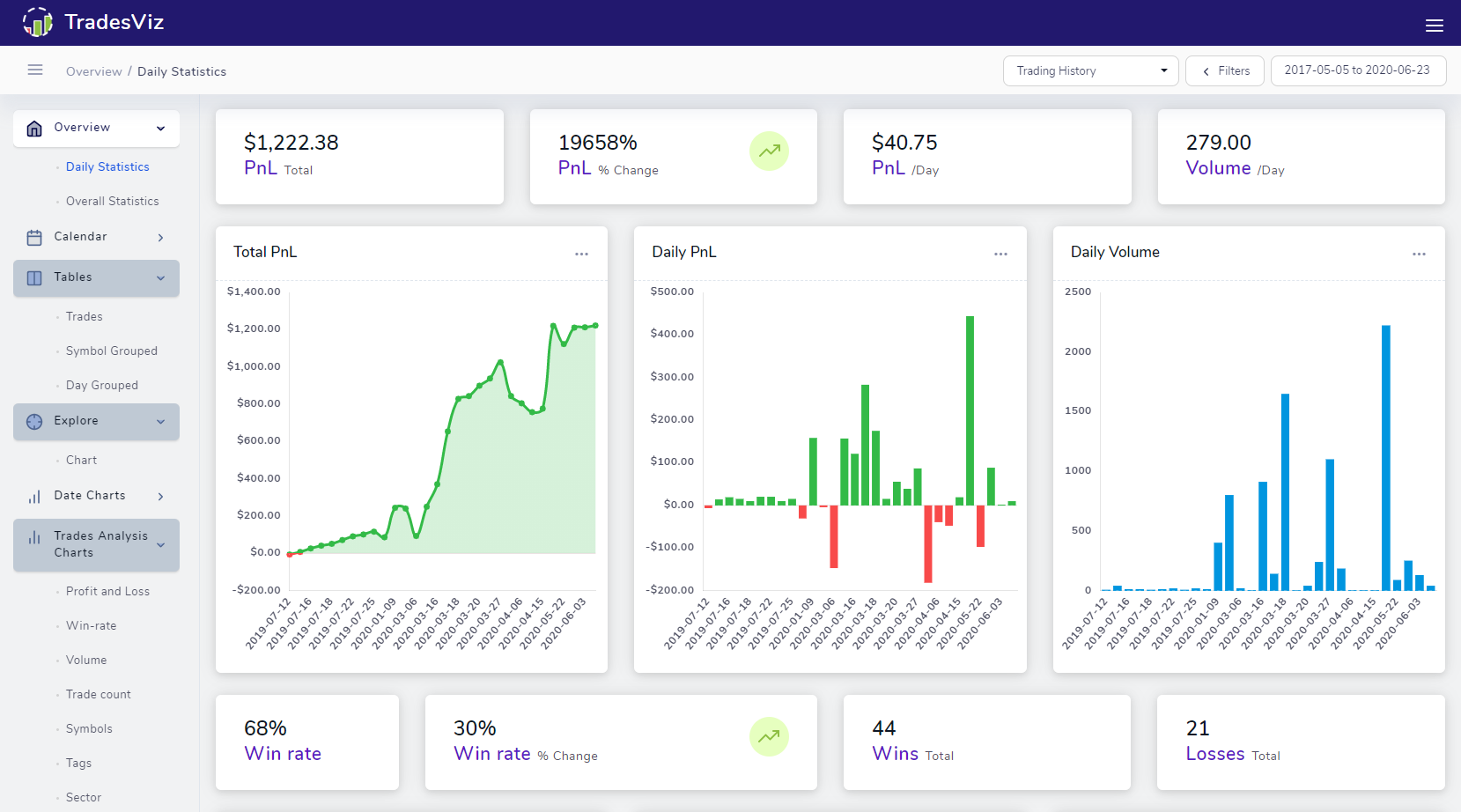
TradesViz offers the most feature-rich free tier in the category — 3,000 trade executions per month, 600+ performance statistics, 70+ interactive charts, and customizable dashboards. The AI Q&A feature lets you ask natural-language questions about your trading data. The multi-asset simulator supports historical replay across stocks, futures, options, forex, and crypto. For traders who want maximum analytical depth at minimum cost, TradesViz is the strongest value proposition in the market.
Where It Stops
The sheer volume of statistics and charts can overwhelm rather than guide. More data does not automatically mean better decisions. TradesViz provides the tools for self-directed analysis but does not structure the improvement process. There is no formal discipline metric, no drift detection, no automated feedback loop, and no institutional layer.
THE FULL COMPARISON
HOW TO CHOOSE
The right platform depends on what you actually need, not what has the most features or the best marketing. Here is the honest decision framework:
Choose Edgewonk if...
You want a focused, psychology-oriented journal at the lowest total cost. You prefer a one-time purchase over subscriptions. You are an individual trader who values simplicity and reflective review over automation. You do not need AI debriefs, drift detection, or institutional features.
Choose TraderSync if...
You are an active day trader who wants maximum analytical depth, the best market replay in the category, and broad broker support across multiple asset classes. You value the ability to replay sessions at near-tick precision. You want an AI assistant that answers questions about your trading data conversationally.
Choose TradeZella if...
You value a polished, modern interface, community features, and social learning. You want backtesting and replay integrated into your journal. You are a newer or intermediate trader who benefits from structured playbooks and shared progress with other traders.
Choose Tradervue if...
You are an experienced equity trader focused on execution quality, cost analysis, and commission tracking. You value stability and maturity over new features. You want a reliable, no-frills journal that has been serving traders consistently for years.
Choose TradesViz if...
You want the maximum amount of data and analytical tools at the lowest possible price. You are comfortable doing self-directed analysis and do not need structured improvement workflows. You trade multiple asset classes and want the deepest free tier available.
Choose TradeRefinery if...
You need more than analytics — you need governance. You want a quantitative measure of your trading discipline. You want automated AI debriefs that generate actionable improvement plans without depending on your motivation. You want behavioral drift detection that catches rule violations before they compound. Or you operate a desk, prop firm, funded trader program, or family office and need multi-seat governance with audit-ready reporting.
The first generation of trading journals solved the data problem. The next generation must solve the behavior problem. If you are still looking for a better journal, any platform on this list will serve you. If you are looking for governance infrastructure, there is currently one option.
THE CATEGORY IS SPLITTING
The trading performance software market is undergoing a structural split. On one side: journals, analytics, replay, and community. These are mature, competitive, and increasingly commoditized. The difference between the top three journals is primarily UX and pricing, not fundamental capability.
On the other side: governance, enforcement, behavioral oversight, and institutional scalability. This category is nascent. It barely exists as a recognized market segment. But it is where the next decade of trading performance improvement will be built — because the analytics problem has been solved, and the behavior problem has not.
Every platform listed above is legitimate. Every one of them has helped real traders improve their performance. The question is not which is best in absolute terms. The question is which architecture matches the problem you are actually trying to solve.
If the problem is "I need to see my trading data clearly" — you have five excellent options.
If the problem is "I need to stop breaking my own rules" — that requires governance. And governance requires infrastructure that journals were never designed to provide.
GO DEEPER BY COMPETITOR
Each of these dedicated pages pairs a public competitor visual with a TradeRefinery governance view so traders and search engines can move through the whole comparison set without friction.